
Political Pistachio

By Douglas V. Gibbs
The Department of Justice launched a nationwide probe into the practice of the mutilation of children’s private parts in 2025. One of the dominoes to fall is NYU Langone Health. After a subpoena by the Trump administration for medical records regarding transgender treatment for minors, while denying any wrong-doing, NYU Langone agreed to end transgender medical procedures for minors, and pay the U.S. Department of Justice $8.5 million in a settlement to avoid releasing the records and enduring what would have been lengthy litigation. NYU Langone is the sixth major hospital system to reach an agreement like this with the Trump administration.
Under the deals made with the Department of Justice, the hospitals may no longer administer puberty blockers, cross-sex hormones, or perform transgender surgeries on minors.
What about all of the gender-affirming information we’ve been hearing for all these years? Were they lies? We were told that “gender-affirming care” saves these poor misunderstood people from mental health issues, that it reduces the chance of suicide by transgender individuals, and anyone who disagrees with that narrative is a bigot and seeks to kill these poor children. “Do you really want these poor children to die? It’s a matter of life and death!”
“Do you want a living daughter or a dead son?” was the question often asked. During a case before the United States Supreme Court in 2024, Justice Samuel Alito said, “But on page 195 of the Cass Report, it says there is no evidence that gender affirming treatments reduce suicide.” In May of 2024, a study showed the risk of suicide actually increased 12-fold following a transgender surgery. A newer study shows that restrictions on puberty blockers, hormones, and surgeries for minors did not increase suicide rates in teens. According to the New York Post, “We ran the data on trans teen suicide panic, and found the claims are misleading.”
Not only is the narrative inaccurate, but it is misleading. Is that purposeful deception? Do children, illegal aliens, the homeless, and prisoners really need the taxpayers to pay for their junk to be chopped off? Maybe, and I know to my leftist readers this might sound crazy, but is it possible that the best thing for a child is to leave their private parts alone, and let them continue to grow and learn and develop without taking knives to them?
A study was conducted by Kingsbury, Greene, and Do No Harm used CDC using data on actual teen suicide rates and they looked at the 23 states where some or all treatments were restricted for patients under 18. That trend started in 2022, and in the four years since, the study found zero evidence that state policies led to increased suicide rates.
Greene and Kingsbury wrote about the study for The New York Post: Activists and their allies may object that our findings neatly conform to our organization’s goal of ending transgender medicine for minors. That’s why our report carefully details our methodology — and even contains the data and code we used in our statistical software. We made our results, our methods and our data completely public so that others can conduct their own analyses to validate our findings. Transgender activists will continue to use the threat of suicide as a means of bludgeoning society into accepting invasive, irreversible medical interventions for children. But unless they can produce evidence for a relationship between state restrictions and suicides, their tactics should be called out for what they are: A manipulative bluff. Parents and policymakers, armed only with common sense, can’t be blamed for buckling when confronted with a dishonest nightmare scenario. Now they have the facts they need to protect children at home, at school and by law.
As for the argument that “bigotry against transgender individuals” is a primary cause of the murder of transgender persons, a Manhattan Institute report has confirmed what reality has been showing us for years: Transgender-identified people are murdered at a lower rate than the general population, their killers are usually people who know them (often intimately), and transphobia isn’t really the motive when these terrible things happen.
From Post Millennial: The report examined over 300 homicides involving transgender victims going back to 2015. Among cases with an identified suspect, 65 percent of those suspects were black, and 18 percent were white … Only 3.3 percent of the cases reviewed in the report turned out to be confirmed hate crimes. ‘The leading identified circumstance of the murders was instead intimate partner violence,’ the researchers wrote. ‘Other common circumstances included sex-work encounters, disputes, robbery, and other forms of interpersonal conflict.’
A study out of Finland found in persons under age 23 who went to gender clinics that psychiatric treatments increased greatly for both boys and girls after they began visiting these clinics. In other words, gender-reassignment worsens mental health conditions, not helps as we’ve been told.
Mental Health and Suicide Risk were the moral basis for operating on perfectly healthy genitalia on kids, changing the child’s sex clinically in a manner that can’t be changed back, and it was all a great deception.
So why are Democrats, Socialists and other left-leaning ideologies still supporting the transgender madness as all of their arguments crash and burn? It’s not some new civil rights movement that they claim it to be. It’s a money-making operation that sacrifices children and God’s Creation (two sexes, male and female) because they hate God and want government to reign over you with an iron fist and a steel scalpel. And, they still support the issue because it pays, and it pays big.
According to Vice President J.D. Vance who is directing the Department of Justice federal criminal investigation into transgender healthcare providers, they have been “falsifying billing codes to get insurance to cover the cost of ‘transgender’ medical interventions for children… [and] defrauding Medicaid.” An HHS report revealed that “doctors and hospitals have filed roughly $120 million in insurance claims related to child ‘transgender’ medical procedures since 2019, noting that more than 225 hospitals and health systems set up pediatric transgender clinics from 2015 to 2025. The report alleges the revenue resulted from “over 5,500 surgical procedures and 8,500 courses of opposite-sex hormones and puberty blockers.”
The report goes on to explain that the clinics in question “used misleading or potentially fraudulent diagnostic and procedural codes” to obtain insurance payments for the interventions, which include mastectomies and vaginoplasties. For example, there was a 30 percent increase in billing for “endocrine disorder, unspecified” from 2020 to 2022, while fewer than 5 percent of patients with that code really had endocrine disorders.
Over the past 10 years, doctors used this generic code to give puberty blockers to hundreds of children ages 9-17 who should have been coded as having gender dysphoria, raking in $42.6 million, according to the report. The majority of the claims were paid by insurance companies, but about $7.8 million was paid by Medicaid.
For transgender-related interventions alone, lifetime health care cost totals for patients who start to “transition” as children can be up to $75,000 “even without surgeries.” With surgeries, it can skyrocket to $170,000 per patient. Even that is before separate therapies like “fertility preservation (egg or sperm banking), voice therapy, hair removal,” or even attempts at reversal through detransitioning.
It’s the ultimate sucker-punch. We go to the doctor seeking care from them so that they can help us with pain or illness, and they respond by calling for expensive treatments and surgery for a sexual identity dysphoria mental condition likely brought on by external forces at school or in politics. They have used deception, and the willingness to destroy lives as young as pre-school, to line their pockets. The path of destruction means nothing to them, and they stand up there at podiums and lie about it and a bunch of virtue signally idiots fall for it and even now as it is all crumbling under the weight of investigation and studies they continue to shake their fists and call anyone who disagrees with their carnage a bigot and a fascist.
It’s a booming industry based on lies and the destruction of body parts – and they are even willing to go after our kids to accomplish it all. The real question is, how many of these politicians and people who are greatly influential in the medical industry are lining their pockets with incredible amounts of money in addition to those performing the barbaric procedures? And mind you, this road to madness began when we began trying to normalize homosexuality.
— Political Pistachio Conservative News and Commentary


By Douglas V. Gibbs
Are we built on the rock or, the sand? The Founding Fathers understood through their own Faith that America’s Unchanging God had a hand in their endeavors. I feel like we’ve forgotten those basic principles. We’ve gone from critical thinking and a solid foundation to shifting sands and a foundational crisis.
We must begin our road to understanding with a basic declaration that has somehow become counter-cultural: God is not like us.
The modern world has fashioned a deity in its own image, and has given God human attributes. According to modern scholars, we have an anxious God who learns, who suffers with the age, and who revises His promises when the culture shifts. This is the God of therapeutic religion, the “crucified God” who bleeds with history rather than governing it. In their eyes, He is a He/She/They cosmic therapist who validates rather than saves.
We must reject this idol.
The God of the Scriptures, and of the Founders, is without body, parts, or passions. He does not discover; He decrees. He does not react; He rules. When Genesis says He “repented” of making man, it accommodates our language; it does not report a divine mood swing. When Hosea says His heart “recoils,” it describes the effect of His unchanging justice, not a fluctuation in His being.
He is the Rock. Not a drowning lifeguard swept away by the same current that drowns us, but the granite foundation upon which everything stands or falls.
This is not cold theology. It is the only theology that makes love trustworthy. A God whose mercy depends on His emotional state is a God who might withdraw it tomorrow. A God who can be wounded by His creatures is a God held hostage by His world. We need a Savior stronger than our suffering. He must be one who can pull us out without going under Himself.
This God (impassible, immutable, sovereign) is the foundation upon which America was built. Not because the Founders were all orthodox Christians (they were not), but because they built upon classical theism whether they fully knew it or not.
If God is unchanging, then truth is unchanging. If truth is unchanging, then rights are not grants of government but endowments of the Creator. If rights precede the state, then the state is limited by something higher than itself. And if the state is limited, then liberty is possible.
This is why the Declaration of Independence appeals to “the Laws of Nature and of Nature’s God” and closes with “firm reliance on the protection of divine providence.” They were not merely being pious. They understood God’s Covenant, His Love, His Care for His Creation, and the foundational beams that would become the United States Constitution. Only a God who cannot change can guarantee that “unalienable rights” will remain unalienable when the political winds shift.
The balance they achieved (a Christian country that was not theocratic, a strong but limited system, federal yet the states remained sovereign) reflects their understanding of transcendence. God is above the chaos of human affairs, yet intimately concerned with justice. Our system of a federal government, supreme in its duties, leaves the local issues to the states.
The Founding Fathers divided power because they knew man is fallen. The reality of human nature guided their decisions. They limited government because they knew God is sovereign. They led with religion because they knew the state could not save, nor survive without God’s Hand.
The Founding Fathers thought in biblical categories even when they didn’t realize it.
When Jefferson wrote of “self-evident” truths, he echoed Psalm 19: “The heavens declare the glory of God.” Truth written into creation, discernible by reason, not imposed by authority.
When they declared independence from a tyrant, they stood on Psalm 2: “Why do the nations rage… He that sitteth in the heavens shall laugh.” No earthly power is ultimate. The Rock remains when kingdoms crumble.
When they established checks and balances, they enacted Psalm 33: “The Lord bringeth the counsel of the heathen to nought.” Human schemes fail; divine purposes stand. Divided power acknowledges that no man can be trusted with absolute authority because no man is absolute.
The hymn “How Great Thou Art” captures what they knew: “When I in awesome wonder consider all the worlds Thy hands have made… Then sings my soul.” Creation implies a Creator. Wonder implies transcendence. And transcendence implies limits… on us, and on our institutions.
But here is the crisis: We have traded the Rock for the sand.
Modern America has embraced the passible God. A humanly devised deity who evolves, who suffers, who changes with the culture. And having abandoned the unchanging God, we have abandoned the possibility of unchanging truth.
If God is malleable, law is malleable. If law is malleable, rights are privileges granted by the state – and what the state grants, the state can revoke. We have replaced “endowed by their Creator” with “evolved by consensus,” and the result is tyranny wearing the mask of compassion.
We see it everywhere:
Judicial activism: courts creating law rather than applying it, because we have come to believe that if the Constitution is “living and breathing,” it is dying. Only dying things change their meaning with every generation.
Administrative overreach: unelected bureaucrats wielding legislative, executive, and judicial power combined, because we have forgotten that power corrupts and absolute power corrupts absolutely.
The erosion of federalism: the states reduced to administrative districts, the Senate made a popular body (1913), the Tenth Amendment a dead letter. When the center cannot hold because we no longer believe in a Center above us, everything flies apart.
The transformation of God-given Rights to Government-defined and distributed rights. False promises. False guarantees. New “rights” seem to be discovered weekly, which means rights are no longer grounded in nature or nature’s God, but in human desire. And desire is fickle.
This is the pattern of fallen civilizations. Rome traded its republic for an emperor when the people demanded bread and circuses. France traded its monarchy for the Terror when they made man the measure of all things. We are trading our Constitution for administrative tyranny because we have made God in our image, and a God who looks like us cannot save us from ourselves.
We are a ticking time bomb. Either we rediscover the truth, or we fade away as Babylon faded, as Rome faded, as every civilization that forgot the Rock has faded.
The rediscovery must be theological before it can be political. How can we get out political house in order if we can’t get our religious house in order? We must return to the God who cannot be destabilized by our suffering, who does not change His mind when we rebel, whose promises are not reactionary feelings but eternal decrees. We must recover the God of the hymn; the awesome, transcendent, unchanging Lord who “the universe displays.”
Only then can we recover the architecture He made possible: limited government, divided power, federalism, enumerated rights, and the confidence that “providence” still protects those who rely on Him.
The alternative is clear. A passible God produces a passible constitution. It then becomes a constitution that changes with every emotional surge of the culture. And a constitution that changes with the culture is not a constitution at all. It is merely the temporary advantage of the powerful, dressed in legal language.
Other civilizations have faced this moment. Some recovered. Most perished. The difference was whether they remembered the Rock from which they were hewn.
We stand at that same fork. The God of our fathers (impassible, immutable, sovereign) still reigns. The question is whether we still want Him to.
“He only is my rock and my salvation; He is my fortress; I shall not be moved.” — Psalm 62:6
— Political Pistachio Conservative News and Commentary

By Douglas V. Gibbs
President Donald J. Trump recently addressed the United Nations General Assembly with a declaration that shocked the globalist establishment: “There is no human right to illegal immigration.” To those who view national sovereignty as an obstacle to world government, this was provocative rhetoric. To students of the American founding, Trump was simply restating constitutional first principles. Sovereign nations determine their own membership. Foreigners do not possess an automatic claim to entry, residence, or citizenship.
The Founding Fathers understood this intimately. Within years of ratifying the Constitution, Congress passed the Naturalization Acts of 1790 and 1795; laws that treated entry and citizenship as deliberate privileges granted by the American people through their representatives, not rights that aliens could demand. These statutes limited naturalization to “free white persons” of “good moral character” who had resided for years and demonstrated assimilation. The racial language, read through a modern lens, appears exclusionary. But in 1790, “white” largely meant European, and the Founders were seeking immigrants who shared their Christian moral framework, English legal understanding, and agricultural skills. They filtered for cultural compatibility and economic contribution, not skin color.
The Constitution itself draws sharp distinctions between presence and political membership. Article I, Section 2 excludes “Indians not taxed” from apportionment because Indians were considered members of sovereign tribal nations, not U.S. citizens. Physical presence within geographic boundaries did not confer jurisdiction. There was, and is, a fundamental difference between territory and citizenship, between merely being here and truly belonging.
The Founders also armed the federal government with specific tools to protect this sovereignty. Article I, Section 8 empowers Congress to call forth the militia to “repel invasions.” Article IV, Section 4 guarantees states protection against invasion. The Founders inhabited a dangerous world of empires that sought to undermine the young republic. They knew foreign agents attempted to infiltrate and influence American politics through immigration. Thomas Jefferson, in Notes on the State of Virginia, warned that unrestricted immigration from absolute monarchies might import “principles of government” incompatible with republicanism.
Today, America faces a similar infiltration disguised as migration. Military-age men from China, the Middle East, and other adversarial regions are entering unvetted across our southern border. When uniformed soldiers of a hostile power cross a frontier, we recognize invasion. When that same power sends civilians to achieve the same strategic objectives (occupation, resource consumption, internal disruption) we are told to call it “migration.” The Constitution makes no such distinction. An invasion need not wear uniforms to threaten sovereignty.
John Locke, whom the Founders read carefully, described society as leaving the state of nature to form communities for mutual protection. Such communities possess the right to determine their own membership. The language of the Declaration of Independence, specifically “consent of the governed,” implies that the governed, and only the governed, decide who joins their political society. Modern “open borders” advocates invert this principle. They demand that foreigners be permitted to join our political community without our consent, then insist that we provide them representation and benefits.
This inversion has produced predictable chaos. ICE officers enforcing duly enacted immigration laws are vilified as Gestapo agents. But when ICE executes a deportation warrant, they perform the same function as police responding to a burglary: removing those who have broken into property where they do not belong. Interference with this law enforcement is not “activism.” It is obstruction of justice. When protestors block ICE operations and suffer injury, they have not become victims as much as they have simply suffered the consequences of willful lawbreaking. We would not sympathize with activists blocking police from arresting a bank robber. Why do we tolerate obstruction of immigration enforcement?
My critics call me anti-immigrant and xenophobic. They are wrong. My wife is an immigrant. Her father came to America from Mexico when she was a child, investing years, money, and effort to follow the legal process. He paid the fees, filed the paperwork, learned English, trained as a welder, and contributed as a productive member of American society. Before he passed last year, I asked him about illegal immigration. He answered without hesitation: illegal aliens disrespect the law and arrive with their hands out, expecting benefits they never earned.
He understood what the Founders understood and what President Trump understands. A nation is not a charity; it is a home. Just as we lock our doors not because we hate those outside but because we love and protect those inside, a sovereign nation vets entrants at its borders. We ask “Who is it?” before opening the door. We remove those who break in rather than adopt them into the household. This isn’t cruelty. It is the minimum requirement of self-preservation.
The “no borders” rhetoric pushed by activists and their media allies serves a darker agenda than compassion. It represents Cultural Marxism’s assault on the nation-state, the “We Are the World” utopianism that ignores human nature and national interest. The same voices demanding open borders for America live in gated communities, demand ID at their events, and employ private security. They lock their own doors while demanding yours remain open.
President Trump’s enforcement of immigration law is not merely policy preference. It is constitutional duty. The Founders armed the federal government with the power to repel invasions, establish uniform naturalization rules, and protect the states against foreign infiltration. When military-age men from adversarial nations enter unvetted, when foreign powers exploit our porous border to place operatives within our territory, when activists obstruct the enforcement of duly enacted law… the constitutional response is clear.
The question isn’t whether America will remain a nation of immigrants. We are, and we should be. The question is whether we will be a nation of laws, or a nation of invaders welcomed by fools and facilitated by traitors. The Founders knew the answer. President Trump knows the answer. The only remaining question is whether enough Americans still possess the wisdom and will to lock the door.
— Political Pistachio Conservative News and Commentary
By Douglas V. Gibbs
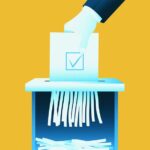
Opinion polls have always leaned leftward 5-15% (in my humble opinion), so whenever I see a poll, I adjust it that much away from the progressive lean to find the actual number. Therefore, whenever you see a poll claiming everything is neck-and-neck, or the Democrats are leading by only a few percentage points, the GOP candidate is typically actually in the lead. Poll manipulation is a game as old, and probably older, than this country.
In this age of technology, it’s getting worse by the minute. Heck, even my suggestion that the lean is a mere 5-15% may be wildly inaccurate as forces we-may-or-not-see take action to manipulate elections. Let’s not forget about the recent Wisconsin Democratic gubernatorial primary in August of 2026 where a fake poll called Median Strategies showed Democratic Socialist of America candidate State Representative Francesca Hong leading by over 20 points using a fabricated study and a well-constructed fake website that suddenly disappeared following the election. One wonders if the outcome, David Crowley winning the race by only a razor-thin margin, was directly influenced by the fake poll. I believe it was, and it was meant to, despite their excuse that it was just a “social experiment” to test how unverified information spreads through the political ecosystem.
As the Mid-Term Elections approach, and President Trump is trying to tighten the screws to prevent voter fraud and election shenanigans, his opposition is resurrecting some of their favorite schemes and tactics. In one report by CNN, they disgustingly reported that “as the Republican Party appears headed toward losses in the midterm elections, advisors urge Trump to declare martial law for the midterms.”
It’s an attempt to continue to capitalize on their false narrative they already have in place that Trump’s supporters are “insurrectionists” and Trump is a “would-be king,” and that the whole GOP is a modern version of Nazi Germany, and Trump is their totalitarian Hitler-wannabe leader. Of course it is all a bunch of hooey, but as the old saying goes, “if you tell a lie long enough and often enough, for some people it will become the truth.”
Then, there’s the polls. If you were to believe them, a blue tsunami is on the horizon. The Republicans, according to a large number of the polls, will be losing key Senate seats. Granted, aside from the skewing, the samplings tend to be in the cities; which means most of the people will be Democrat-leaning or moderate Republicans.
We should have learned the lesson back in 2016 when every poll out there had Hillary Clinton winning the presidency. This is what the left does. Ask yourself. Have you ever seen a Democrat surprise everyone by exceeding his polling against a Republican? Aside from Obama over Romney, not at all. But when the GOP wins, “wow, how did we not see this? How could the polls be so wrong?”
I am not saying we are looking at a “red wave,” or that we should expect to skate in easily to a win, either. In fact, the skewing of the polls should have us concerned because what they do is suppress GOP turnout – and then they ultimately become accurate because they convince us to make it so. It’s a sort-of self-fulfilling prophecy.
Conservatives cannot afford to sit this one out, or any election, for that matter. But, with the skewed polls and the lying fake news media, many will because they begin to believe the lies. I’ve been told quite a bit by establishment folks that many Republicans plan to sit this one out. I’ve not met anyone who says they aren’t voting in November, and likely I am being lied to by the lefties claiming such, but that doesn’t mean we should take their words lightly, either.
All polls aren’t junk. Rasmussen is more often than not close to the truth. But, to be honest, I am not one to pay much attention to the polls because in my opinion they are like pre-season football games. They give us an inaccurate snapshot, but the truth won’t be revealed until the real game is afoot. They act like polling is a science, but it’s guesswork based on a small sampling that claims to represent America. Even the honest pollsters are guessing, at best. And, like I said, I believe most of the polls are far from honest, and that their results are not as much guesses as they are wishful thinking.
I honestly don’t believe Abdul El-Sayed has a chance to win in Michigan, or that James Talarico is running away with the Texas Senate race. I don’t believe MAGA support is declining, or that people are willing to vote en masse for candidates who want your children to change their sex and for mom and dad to have nothing to say about it. However, we indeed need to take what the polling and experts say with a grain of salt, as they say. Mountains of polling does not decide the race, and the mess-ups over the recent years by polling are so appalling that I am surprised anyone even pays attention to them at this point.
As for all those Democrats who are convinced that the congressional Democrats are poised to come out on top big in the midterm elections, once the emotions and the lies are set aside the reality is that the Republicans are likely to hang on to both Houses of Congress, and they will likely increase their majorities. The GOP outperformed polls regarding federal offices in 2024 by 5 to 10 points, and I believe President Trump is more popular now than he was then. And yes, though he is not technically on the ballot, Trump is indeed on the ballot in the back of everyone’s minds. I think most Americans do indeed realize that if the Democrats take either House, all of the work accomplished by Trump will come cascading downward and all you’ll see over the next two years is impeachment and attempts to destroy Trump’s accomplishments.
That’s why they are pushing for illegal alien voting, and are doing what they can to stop the SAVE America Act. They are desperate, and deep down they know they are losing despite what some of the polls say. If it takes pulling out all of the stops, they are willing to do it. A Biden commie Judge, David Leibowitz, was even willing to jump into the snake-pit with the Democratic Machine when he ruled against stopping illegals from voting. The Democrats are insisting that “noncitizens don’t vote” in their congressional push to stop the SAVE America Act, while simultaneously using the courts to make sure illegal aliens can. In fact, the message is that any ban on noncitizens voting in federal elections is unconstitutional (despite voting and citizenship appearing together in four amendments to the Constitution). They know statistically they can’t win. Statistically, Biden had no chance in 2020. So how did they pull it off?
Must I use the “F” word?
Fraud.
There, I said it.
They pushed a candidate who could not finish a complete sentence, and won with that guy even though every battleground House race was won by the GOP.
My calculator, when I fed it that equation, answered, “B.S.”
But, the Democrats never worried. They had the polls, they had the illegal vote, and they had the voter-fraud game in high gear.
They know they can’t persuade a majority of Americans to believe in higher taxes, more government control over our lives, and a list of social issues that would make residents from Sodom and Gomorrah blush like school girls. So, they have to cheat. They lie, they cheat, they commit fraud, and now that much of that isn’t riding as well as in the past, they are kicking the whacky poll numbers ploy into high gear.
There is also, of course, what they don’t tell you. They won’t tell you about the “manufactured man” scandal surrounding Abdul El-Sayed. They won’t admit that they truly hate capitalism, and those who do don’t even understand what capitalism truly is because to be honest in our country it is so infested with collectivistic socialist rot it’s hardly what it is supposed to be. They don’t tell you that much of the propaganda against A.I., data centers, and against the GOP is coming from China who has been indeed meddling in our elections since long before any of our lifetimes. The Chinese are paying for anti-technology propaganda more than Middle Eastern countries were paying for anti-fracking movements. And, as Obi Wan would tell us, it works well on the weak-minded. They don’t tell you that despite 80% of Americans supporting Voter-ID, the Democrats have been blocking it in Congress, along with Congressional Stock Trading. And, it’s not merely most office-holding congressional Democrats. In the case of the U.S. Senate, every Democrat is standing against Voter-ID and stopping members of Congress from trading individual stocks while they are writing the laws that move those stocks. They also don’t tell you about the long list of positive Trump economic indicators in jobs, spending, and income data. Instead, they sell you a false “affordability crisis” narrative. Gas prices are not much higher than during the Biden presidency, and Sleepy Joe’s numbers were due completely to the failed policies of the Democrats, not necessarily due to a war we are directly involved in. According to statistics, at the moment under Trump poverty rates have fallen to an all-time low. The poverty rate fell to 10.2% in 2025, the lowest ever recorded. The median household income has risen 2.6%, to the highest level since 1967 when adjusted for inflation. Jobless claims are currently at historically low levels. In July, jobless claims were the lowest since September 1969. The unemployment rate is as low as it was at the start of the Trump presidency. Gross domestic product growth was 2.2%, exceeding the Commerce Department’s initial projection of 1.5%. Consumer spending has increased at a 3.8% annual pace. They also don’t tell you that President Trump slashed $810 million in federal spending with one rescission package. $1 billion went bye-bye with illegal alien and race-focused programs being slashed. $567 million was cut from the Health and Human Services programs by targeting programs serving non-citizens. Another $15 million has been eliminated by cutting a Biden-era DHS program that funded services for illegal aliens. $10 million has been slashed by ending programs designed to help aliens enter the country. $25 million was cut from education programs for non-citizens. $15 million is gone by cancelling the Justice Department’s Community Relations Service that has been entangled in political and ideological activism. $10 million is gone for race-based business development, and $9 million for foreign climate-debt relief. $70 million has been slashed that was attached to international education programs that included projects around gender ideology and DEI. Trump has also gotten rid of more regulations than any president. The list goes on and on, yet the media isn’t talking about it, and Democrat-aligned folks in my life still somehow find a way to blame Trump for the national debt hitting $40 trillion.
What they also don’t talk about is how if the Democratic Socialists were able to get their way, the financial burden for each household would jump by over $350,000 per household over the next decade. Democratic polices aligned with DSA socialist pipedreams would cost $49 trillion through 2036. The costs would be associated with policies like loosening border restrictions, handing out amnesty, abolishing ICE and U.S. Immigration Services, eliminating prisons, “healthcare for all,” a mandatory 32-hour work week, and canceling all student loan debt. “Medicare for all” would, on its own, cost $47 trillion, paid for by a revenue stream that would be dwindling rapidly in size due to a reduction in production and innovation caused by their higher taxes on all, and a Wealth Tax. The report revealing all of these fun facts came out the same day President Trump kicked off his 32-day campaign blitz for the GOP – and he’s not shy about talking about the details of the failed policy plans of the Republican Party’s opponents.
Which is why it is imperative we vote in November, and stop the Democrats in their tracks. Anything less could sink our country, and all of the hard work Trump has put in to get us out of the mess the Democrats keep leading us back into every time they grab the reins.
— Political Pistachio Conservative News and Commentary

By Douglas V. Gibbs
When a society abandons the rule of law for the rule of man, a dance around a golden calf is never far behind.
Culture matters. Civilizations don’t run on laws alone; they run on the virtues that give those laws meaning. As Andrew Breitbart famously observed, politics is downstream from culture. A corrupt culture inevitably produces corrupt governance.
This is why we should be alarmed by the creeping incrementalism of Cultural Marxism, an ideological strategy explicitly designed to dismantle the moral foundations of non-comminist societies. The goal isn’t reform; it’s deconstruction. Collectivism cannot seize control of a functioning system until it has first delegitimized the norms, institutions, and moral structures that sustain it. Antonio Gramsci called this “The Long March Through the Institutions;” a patient strategy of infiltrating and subverting a society’s cultural, political, and academic pillars until they collapse under the weight of their own alleged contradictions.
Enter Lane Kiffin.
After spending six years rebuilding Ole Miss, guiding the program to an 11-1 record and its first-ever College Football Playoff berth by the end of the 2025 season, Kiffin shattered the team’s momentum at the worst possible moment. He announced his departure for SEC rival LSU, then abandoned his players before the postseason. The timing delivered chaos when it was least needed. While his players and the fans had bought into his vision, he cashed out for a bigger paycheck without as much as a “howdy-do.” The subsequent poaching of players and staff during the messy transition only confirmed what the move suggested: for Kiffin, there is very much an “I” in team.
His behavior was disloyal, harmful to the sport, and fundamentally unethical.
Now, instead of pariah status, Kiffin enjoys celebrity treatment. Dr. Pepper and DoorDash have turned his betrayal into punchlines (“illegal Lane changes,” “Fansville: Fishing Trip,” and “Don’t fan for free”) transforming shameful conduct into savvy branding. Satire can be a weapon against hypocrisy, but here it’s being used to celebrate the hypocrite. These commercials don’t condemn Kiffin’s greed; they normalize it. They teach the next generation that winning unethically is just another form of winning, that grabbing headlines matters more than keeping your word.
John Adams understood what was at stake when he warned that our constitutional republic required a “moral and religious people.” Benjamin Franklin, during the Constitutional Convention, said, “Only a virtuous people are capable of freedom. As nations become corrupt and vicious, they have more need of masters.”
I am not suggesting that a soft drink commercial will single-handedly unravel the republic. But Kiffin’s ads are not isolated incidents. They are symptoms of a deliberate campaign to demoralize our institutions, erode our shared values, and render our culture unrecognizable to its founders. The normalization of shifting moral standards, market-tested and focus-grouped, gradually acclimates us to a world where loyalty is laughed at and greed is winked at.
This is psychological warfare disguised as entertainment. An inch here, an inch there; and soon you’ve moved miles from your foundational principles.
Given an inch, they take a mile.
— Political Pistachio Conservative News and Commentary
Fake News and the First Amendment
By Douglas V. Gibbs
The battle between presidents and the “Fake News” outlets is nothing new. President Trump criticized the mainstream media during the first term of his split presidency as well, George W. Bush was hammered relentlessly by the media, Ronald Reagan was attacked daily, and conservative newscasters and pundits have been making the same complaint about how left-leaning and dishonest the mainstream media is as long as I can remember. Rush Limbaugh, all the way back in 1988 when he launched his national platform, was critical of the media from the beginning; naming them the “lamestream media” later in the 2000s. As early as 1988, Rush targeted traditional establishment news organizations, accusing major newspapers and television networks of a persistent liberal bias. He framed mainstream outlets as false gatekeepers, routinely popularizing alternative labels like “drive-by media.”
The battle between ideologies in the media, and between news sources and Presidents of the United States goes all the way back to the beginning. Thomas Jefferson was openly critical of the newspapers. Among the early presidents, Thomas Jefferson had perhaps the most contentious relationship with the press. He expressed extreme frustration with newspapers, calling them “a receptacle of every species of political slander.” Jefferson particularly despised the Federalist Party aligned press, which he believed was unfairly aligned against him.
John Adams signed the Sedition Act of 1798, which made it a crime to publish “false, scandalous, and malicious writing” against the government. Several newspaper editors and publishers were actually jailed under this very unconstitutional law. It was the first of two sedition acts during American History, the second passed during Woodrow Wilson’s presidency, that served as a severe form of press suppression that was worse than anything any modern president has attempted.
James Madison, who opposed the Sedition Act, still faced his own press challenges as president. He dealt with partisan newspapers that often published scathing attacks against him and his policies.
A structured White House press corps and formal press access protocols we see today didn’t really exist in the early republic. Presidents in that era generally interacted with the press less formally, and the concept of a “press room” with designated access didn’t develop until much later.
RELATED: TRUMP’S FREEDOM OF THE PRESS
The institutionalized relationship we see today between the White House and press began gradually, with key developments. The first formal White House press coverage began during the early 1800s. During Lincoln’s presidency, a new era began as the press changed focus from serving presidential or party interests to getting stories quickly and attracting readers. The modern press pool system began as a practical arrangement in the late 1930s, solving the problem of how many reporters could access the president when only a few could fit in a room. The White House Correspondents’ Association, an independent nonprofit organization that would largely manage the White House press corps, was established during Woodrow Wilson’s presidency. The physical infrastructure we recognize today, the James S. Brady Press Briefing Room, was constructed in 1969-70 during Nixon’s administration, built over the swimming pool that had been installed for FDR in 1933. For most of the press pool’s history, the White House Correspondents’ Association controlled which outlets covered the president on any given day, though presidents have historically had substantial discretion to determine physical access and logistics for presidential events. The institutionalization was gradual, beginning with basic press coverage in the early 1800s and evolving into the structured system we recognize today by the mid-20th century.
Several presidents have historically limited press access for reasons beyond credentials, legitimacy, or space. Here are the key historical examples:
Richard Nixon took perhaps the most extreme measures against the press. After The Washington Post broke the Watergate scandal, Nixon banned Post reporters from anywhere in the White House outside the press briefing room. He also directed his staff not to talk with reporters from The New York Times, St. Louis Post-Dispatch or Washington Post after a critical article in May 1969. Nixon even kept a now infamous “enemies list” and barred Washington Post reporter Judith Martin from his daughter’s 1971 White House wedding over her coverage of the family.
The Obama administration excluded Fox News from a TV reporting pool for one interview in 2009. In the final days of Obama’s 2008 campaign, officials removed journalists from the Washington Times, New York Post and Dallas Morning News from the pool of reporters traveling on Obama’s plane after those papers endorsed his opponent.
Woodrow Wilson threatened to cancel press conferences entirely after a reporter published comments he had made off the record.
The Biden administration tightened requirements for White House press credentials in 2023, resulting in a decrease in hard passes issued from 1,417 to 975. While the administration cited space limitations, the New York Post suspected one of its reporters was denied access because he had previously questioned Biden about the Biden family’s alleged dealings with foreign countries.
These examples show that while formal, across-the-board bans on entire news organizations are rare, presidents have historically used access restrictions as a means of expressing displeasure with coverage.
Now the Trump administration is under fire for taking actions that the leftist “drive-by media” isn’t liking. Trump’s administration has taken control of which White House reporters travel with the president in the “press pool.” Trump also banned CNN, MS NOW and Politico from the White House, accusing them of reporting “fake news.” The Trump administration argues that access is a privilege, not a right. The leftist media has gone so far as to file a lawsuit over Trump’s denial of access. So far, it seems not to be going well for the Trump administration with the lawsuit. U.S. District Judge Timothy Kelly issued a 14-day temporary restraining order forcing the White House to restore press credentials. The news organizations are asking the court to keep the restraining order in place as the full lawsuit moves through the legal system.
From a strict constructionist and originalist perspective Trump’s press access decisions don’t violate the First Amendment. The First Amendment’s text states: “Congress shall make no law… abridging the freedom of speech, or of the press.” The key phrase here is “Congress shall make no law” – this is a limitation on legislative power, not executive discretion regarding access.
The key is to look at how the Founders understood press freedom. During their era, newspapers were explicitly partisan and often vicious in their attacks. Jefferson himself wrote about the “infidel newspaper” and “mercenary hirelings” who opposed him. The Founders’ concept of press freedom was preventing government from censoring content or imposing prior restraint, not guaranteeing access to government officials or facilities.
From a constitutional constructionist viewpoint, the First Amendment creates a negative right against government interference with publishing, not a positive right to access presidential briefings or White House press rooms. The press remains free to publish whatever they wish without government censorship – they can write critical articles, report on information they obtain through other means, and criticize the administration’s access policies.
ENJOYING THE CONTENT? DROP A FEW COINS IN THE TIP JAR.
The institutionalized White House press corps with designated access is a modern development, not something contemplated by the First Amendment’s framers. When they wrote the amendment, the concept of a formal White House briefing room with assigned seats didn’t exist – newspapers operated independently, gathering news through their own methods.
This distinction between freedom from censorship versus guaranteed access aligns with how the Supreme Court has traditionally approached First Amendment cases – focusing on whether the government is preventing speech or publication, not whether it’s providing special access to journalists.
— Political Pistachio Conservative News and Commentary